
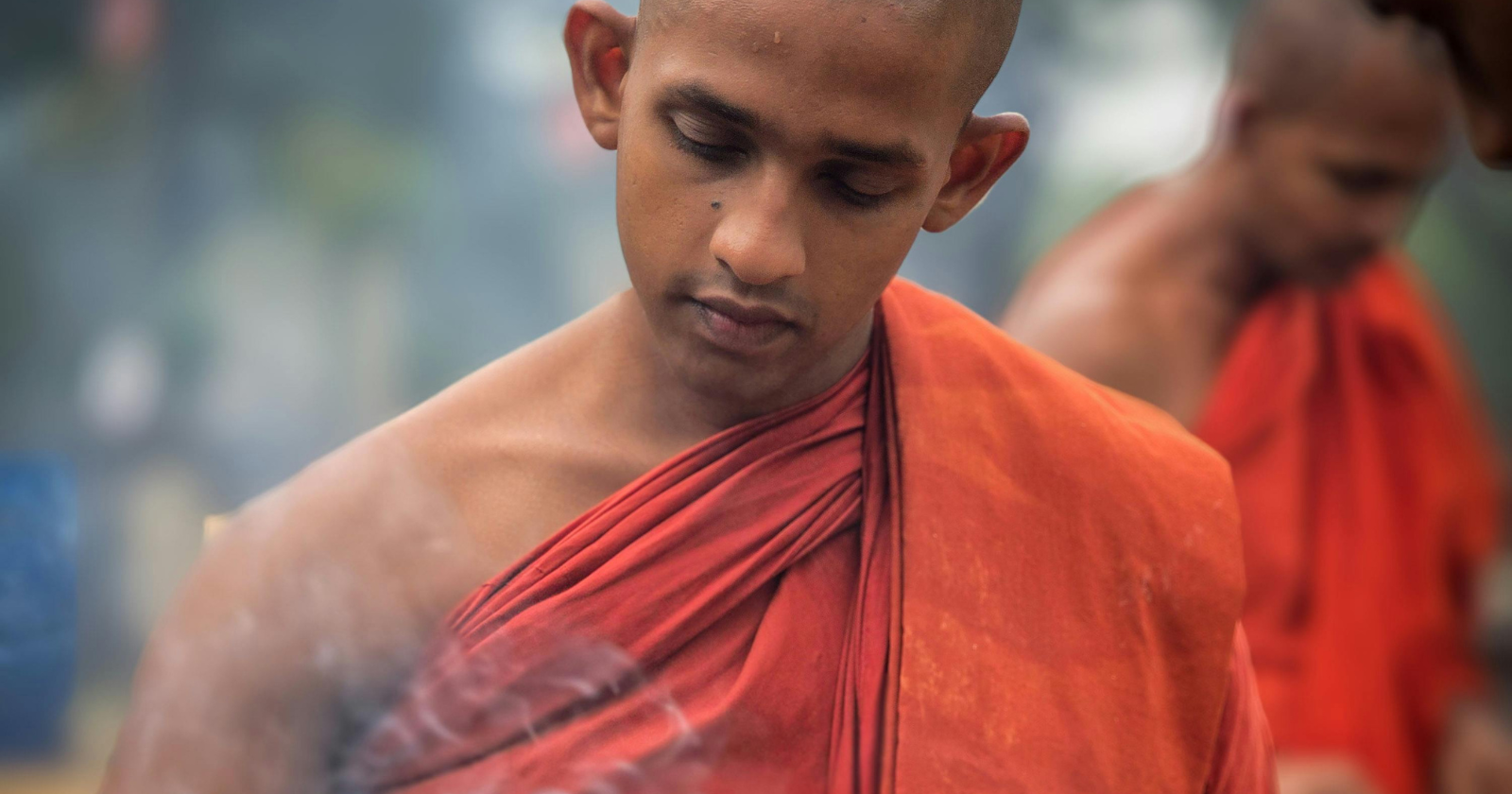

Something unexpected is happening in the spiritual landscape. The same generations most likely to leave organized religion are the most likely to pick up a book on Buddhism, download a meditation app based on the Vipassana tradition, or quote Lao Tzu on their social media. They do not transform. They do not join temples. But they read, practice, and integrate ideas from Buddhist and Taoist philosophies in ways that would have baffled their grandparents.
This is not a trend about crystals and astrology. Buddhist and Taoist philosophies represent two of the oldest and most rigorous intellectual traditions on the planet. They touch on suffering, impermanence, the ego, the nature of reality, and what it’s like to live in an uncertain world. And it turns out that these topics work differently when you’re 25 and going through it than when they’re presented in a textbook.
I discovered Eastern philosophy as a teenager through a book I chanced upon in a local library in Melbourne. I wasn’t looking for spirituality. I was looking for something that made sense. The usual advice I received: work hard, achieve something, stay positive felt empty. Buddhism offered something else: an honest appreciation of why life is hard, without pretending that it shouldn’t be. I think it is this honesty that attracts young people.
The shift is “spiritual but not religious.”
To understand why Buddhist and Taoist ideas are gaining strength among the younger generations, one must first understand where they are coming from.
Pew Research Center 2023-24 Exploring the Religious Landscape found that 29% of American adults now identify as religiously unaffiliated, up from 16% in 2007. Among adults under the age of 30, nearly 44% are not “non-fans.” Yet the same study shows that about 70% of Americans still consider themselves spiritual in some way, and about seven in ten young people believe that there is something beyond the natural world.
In other words, young people do not reject the transcendent. They reject institutions, dogmas, and prescribed belief systems. They need frameworks that they can test, adapt and apply on their own terms. Buddhism and Taoism, which have always emphasized direct experience rather than received authority, fit this description perfectly.
Why Buddhism and Taoism
Not all Eastern philosophies acquire the same power. Yoga is ubiquitous, but often deprived of its philosophical roots. Hinduism has a rich tradition, but many Westerners perceive it as culturally specific. Buddhism and Taoism landed differently, and there are certain reasons for that.
Both traditions are not theistic, or at least do not require belief in a creator God. For generations raised to be skeptical of religious authority, this is of great importance. You don’t have to believe in anything to practice Buddhist mindfulness or apply the Taoist principles of flow and non-resistance. You just have to try them and see what happens.
At the heart of both traditions is personal experience. It is known that the Buddha told his followers not to accept the teachings only on authority, but to test them by their own experience. The Dao De Ching begins by saying that the Tao that can be fully spoken is not the true Tao, immediately guiding you from dogma to direct perception.
Both traditions take suffering seriously without pathologizing it. The first noble truth of Buddhism, that life involves suffering (dukkha), sounds bleak. But for a generation exhausted by toxic positivity and a “good vibes only” culture, it’s a relief. Someone finally says, yes, it’s hard. It’s not your fault. Now here’s a framework for working with it.
And both traditions offer practical tools, not just philosophy. Meditation, mindful breathing, contemplation of impermanence, practicing non-attachment: these are not abstract concepts. This is something you can do today, in your apartment, without joining anything.
Five Forces Driving Rediscovery
The convergence of several cultural forces created a moment when these ancient ideas became extremely modern.
The mental health crisis has left people hungry for tools that actually work. Anxiety and burnout have reached record levels among young people. Therapy is valuable, but expensive and difficult to access. With deep roots in both Buddhist and Taoist practices, meditation offers something accessible and backed by facts.
The attention economy has created a counter-desire for presence. When your attention is captured by algorithms designed to keep you scrolling, the Buddhist emphasis on mindfulness training feels less like a spiritual practice and more like survival. The Taoist concept of wu wei (effortless or unforced action) resonates with people who feel they are constantly facing an irresistible current.
Disenchantment with the hustle culture has opened up space for alternative definitions of success. Taoism, with its emphasis on flow, naturalness, and harmony with the environment, provides philosophical support for an intuition that many young people already have: that relentless pursuit does not work.
Access to information has democratized these traditions. You no longer need to go to a monastery or search for a rare translation. The Dhammapada, the Tao Te Ching, and high-quality commentaries on both are freely available online. Podcasts, YouTube channels, and apps have brought these teachings to millions of people who would never have set foot in a temple.
And the global perspective of younger generations makes them more open to a non-Western worldview. Growing up with the Internet means growing up with exposure to different cultures and ideas. Eastern philosophy does not seem foreign to someone who has been watching Korean, Japanese and Chinese media since the age of 12.
What they actually take from these traditions
It is worth clarifying which ideas land the hardest. It is not a complete acceptance of Buddhism or Taoism. It is a selective integration of certain principles that solve sensitive problems.
Impermanence (anykcha in Buddhism). The idea that everything changes, every feeling, every situation, every version of yourself, is very practical for a generation dealing with constant uncertainty. It doesn’t make things any easier. This makes them more tolerant.
Detachment. Not isolation or indifference, but the practice of taking things lightly. Goals, relationships, results. Young people are drawn to the Buddhist idea that you can care deeply about something without being destroyed if it doesn’t go as planned.
Taoist concept in Wei. Do without forcing. Working with the grain of the situation, not against it. For people raised in a culture that glorifies hustle and bustle, this seems radical and liberating.
Beginner’s Mind (Shoshin in Zen). Approaching situations with openness and curiosity rather than experience and discretion. In a world that rewards opinion about everything, it’s quietly counter-cultural.
And the Middle Way, the Buddhist principle of avoiding extremes. Not asceticism, not indulgence, but a balanced path between the two. This naturally flows into modern problems of work-life balance, consumption and emotional regulation.
That people are wrong about this change
There is a legitimate concern that what is happening is commodification rather than genuine participation. That Buddhism is reduced to meditation apps and Taoism to aesthetic Instagram quotes, and that deeper teachings about ethics, community, and ongoing practice are being lost.
This concern has merit.
“Mindfulness” divorced from the ethical framework of the Eightfold Path is thinner than what the Buddha taught. The Lao Tzu quote against the sunset is not Taoism.
But I would reject cynicism. For many young people, an application or citation is a point of entry rather than a destination. I wrote a book called The Hidden Secrets of Buddhism specifically because I believe these ideas deserve to be accessible rather than locked away behind academic jargon or cultural fabric. A teenager who shows inconsistency during a Headspace session can continue to read the Pali Canon. Anyone who never does this still has a useful tool for dealing with anxiety. Both outcomes have value.
There are also criticisms that Westerners are co-opting Eastern traditions, taking what is convenient and abandoning strict practice. This is partially true. But selective interaction is not exclusive to this moment. Buddhism has always been adapted by every culture it has entered. Thai Buddhism is different from Japanese Buddhism, which is different from Tibetan Buddhism. Tradition is built on adaptation.
What matters is whether the engagement is sincere. Are people using these ideas to actually change their lifestyles, or just to embellish their existing habits with philosophical language? I think the answer lies in both, in every generation and in every tradition.
How living in Asia changed my understanding
I treat Buddhism more as a practical philosophy than a religion. I don’t consider myself religious, but I really appreciate Buddhist principles. This position is shaped not only by reading, but also by years of living in Vietnam and Singapore, where these philosophies are not trends. They are embedded in the way people eat, greet their elders, and cope with difficulties.
In Vietnam, constancy is not a concept you learn. This is what you live for. Movement is unpredictable. Plans change. The weather changes mid-sentence. Living there made me relinquish control in a way that everything I read about non-attachment didn’t quite achieve. It is one thing to understand a principle intellectually. It’s another thing when your motorcycle ride is interrupted by a sudden thunderstorm and you realize you’re laughing instead of angry because somewhere along the way you stopped expecting things to go according to plan.
I think lived experience is what ultimately separates intellectual interest from real practice. And my hope with the current wave of young people joining these traditions is that they will find their own version of it, whatever that looks like.
2 minute practice
Here’s a practice taken from Taoist philosophy that takes almost no time and requires nothing. The next time you are doing something routine, washing the dishes, going to the store, waiting in line, try this: instead of thinking about what will happen next, focus all your attention on what is happening now. Feel the temperature of the water on your hands. Pay attention to the ground under your feet. Listen to the sounds around you without labeling them.
Here is Wu Wei in miniature. Without forcing your attention somewhere important. Let it rest on what is actually here. The Taoist insight is that the unadorned present moment is enough. You don’t need to add anything to it.
Common pitfalls
- Attitude to Eastern philosophy as self-help. Buddhism and Taoism are not life hacks. These are comprehensive systems of thought with ethical aspects. Taking only the parts that reduce your stress without asking questions about how you treat others makes no sense.
- Picking up concepts without practice. Reading about non-attachment is not the same as practicing it. Knowledge without application is just entertainment.
- Romanticization of Eastern cultures. These philosophies arose in complex societies with their own problems. Idealizing the “East” as inherently wiser or more peaceful turns real cultures into projections.
- Replacing one dogma with another. When you leave organized religion only to become firm about your Buddhist or Taoist identity, you have traded one set of chains for another. Both traditions would have warned against it.
Simple takeout
- Younger generations are leaving organized religion, but not spirituality. Buddhist and Taoist philosophies fill the gap because they are non-dogmatic, experiential, and practically applicable.
- Concrete ideas such as impermanence, detachment, the way, and the middle ground address tangible issues: anxiety, burnout, information overload, and rejection of the culture of hustle.
- Access has been democratized. You no longer need a monastery or a rare translation. Books, apps, and online communities have brought these traditions to millions of people.
- There is a legitimate concern about commodification, but selective interaction has always been a way of moving between cultures. Sincerity is important, not purity.
- The real shift is not philosophical tourism. This is a generation looking for honest structures that take suffering seriously, offer practical tools, and don’t require you to believe in anything.
Did you like my article? Like me on Facebook to see more articles like this in your feed.