

You love God. You pray. You trust or you try. And yet your body says something else. Your shoulders are tight before the day starts. Your mind wanders at night. There’s a low, familiar hum of anxiety in your chest that never goes away. It’s time to learn religious habits that support your nervous system and help calm the stress your body is experiencing.
If this sounds like you, this letter is not a message of stronger prayer. Consider this letter an invitation to recognize that the familiar practices of faith—prayer, silence, worship, rest, and gathering—are powerful means of calming an overstressed nervous system.
These habits of faith that support your nervous system are not a new self-help trend. In many ways, they are the most ancient wisdom. And science is only now catching up to explain why they work so well.
TRY IT RIGHT NOW
Breathing prayer in two stages
Inhale slowly
“Be quiet…”
→
Long exhale
“…and to know.”
Repeat three times. This exhalation already calms your nervous system.
🧠 An accurate explanation of your nervous system
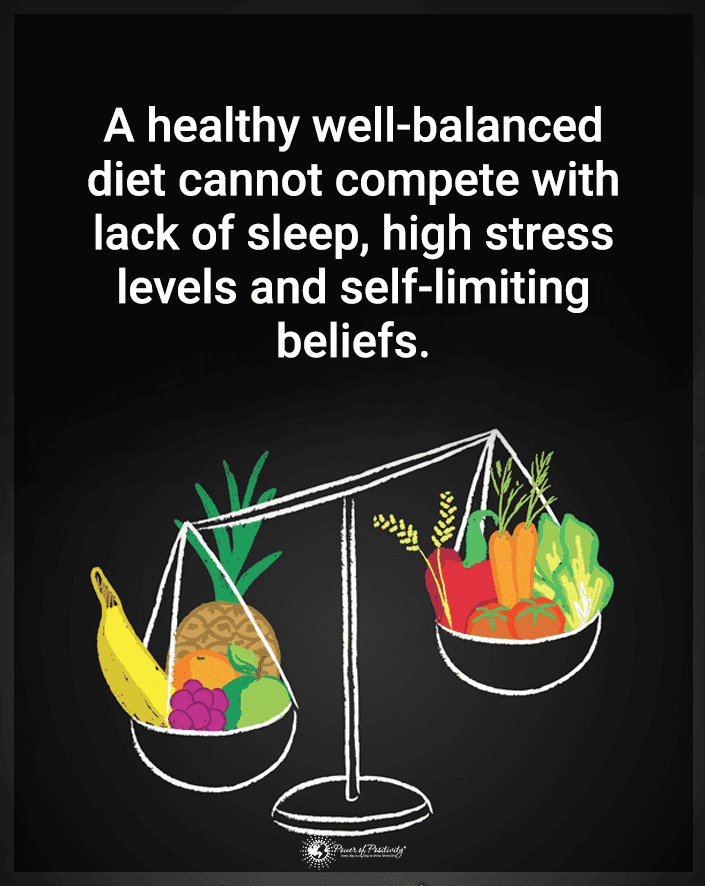
Before we get into the habits, it helps to understand what happens in your body when stress takes hold. Quite a bit. Nothing complicated.
Your nervous system operates in two main modes. The first is fight or flight, your body’s state of anxiety. When it’s activated, your heart beats faster, your breathing shortens, and your muscles tighten. This mode is for emergencies, but modern life, with its noise, demands, and constant input, can keep it on long after the emergency has passed.
The second regime is rest and digestion. This is where your body heals, your mind calms, and true peace becomes possible. The path between these two states is mainly through a nerve called the vagus nerve, a calming channel built into the body. Slow, deliberate exhalations stimulate the vagus nervesending a safety signal that alleviates the stress response almost immediately.
Many of us, especially those who carry a heavy burden of care or responsibility, spend too much time on the alarm clock. Not because our faith is weak. But our nervous system needs deliberate, repetitive signals that it’s safe to rest. This is what the right habits give.
🕊️ Why is it not a lack of faith
There is a conviction, seldom spoken aloud, but deeply felt, that a truly faithful man need not struggle with anxiety. It is believed that if your trust in God is strong enough, your nervous system will follow. And so on top of the worry itself comes a second layer: guilt for worrying at all.
This needs to be made clear: anxiety is not a judgment of your faith. It’s your body’s alarm system doing what it’s designed to do, detect danger and prepare you to respond.
This system does not automatically turn off, no matter how deep your faith. Even the most faithful people in the scriptures knew fear, exhaustion, and depression.
Taking care of the nervous system is not a way out of insufficient faith. This is management. Your body is part of what you were given to care forand taking good care of it is an act of trust.
EVEN THE FAITHFUL STRUGGLED
“I am tired of my moans, all night I fill my bed with tears.” — Psalm 6:6
David, a man after God’s own heart, knew what exhaustion was.
“I am enough, Lord. Take my life.” — 1 Kings 19:4
Elijah, one of the greatest prophets, collapsed under the weight of it all.
“Do not be anxious about anything…” – Philippians 4:6
Pavel wrote these words from prison. He knew the struggle was real and offered a way out anyway.
🙏 6 reliable habits that calm the nervous system
These are not new disciplines to add to an already busy life. Most of these are practices that your faith has always invited you to do. This is where the understanding of why they work in your body and not just in your mind changes.
1. Breathing prayer
Slow, deliberate breathing is one of the fastest ways to activate the vagus nerve and get your body out of a stressful state. Combine it with prayer and it becomes something richer.
Inhale slowly and whisper “Be still.” Exhale long and slowly, saying “and I know.” A longer exhalation produces a calming responseand it works within seconds.
2. Prayer from the Holy Scriptures aloud
Speaking the truth out loud has a measurable effect on the brain. It engages the language centers and diverts activity from the amygdala, the part of the brain responsible for fear and anxiety.
When you say a poem out loud, rather than just reading it, you give your nervous system something true and persistent.
3. Deliberate silence
“Be dry and know that I am God” (Ps 46:10) is not only a spiritual invitation.
Harvard researchers call this kind of deliberate silence the relaxation responsea measurable shift in the body that lowers your heart rate, slows your breathing, and lowers your cortisol levels.
Even five minutes of deliberate silence makes a difference.
4. Worship and gratitude
Gratitude and worship shift the brain’s focus from threat to hope, dampening the stress reflex in the process.
Singing, in particular, requires a rhythm of breathing that naturally regulates the body.
You didn’t just worship when you sang. You also quietly soothed your nervous system.
5. Gathered community
Research shows that singing with others releases oxytocina bonding hormone that creates a sense of security and eases the isolation that so often feeds anxiety.
Coming to worship together is not only spiritually nourishing. It is one of the most powerful co-regulatory tools we have.
6. Saturday rest
A regular, protected window of real rest allows the body’s stress system to resetreduces evening cortisol levels and improves heart rate variability, a key marker of nervous system resilience.
Shabbat is not laziness. It’s the deepest form of trust that tells your body and soul that you don’t have to hold it all together.
🗓️ How to make it a normal week

You don’t need to revise your daily routine. The goal is to tie small habits into moments that already exist in your day so that they feel natural, rather than just another chore.
Breathing prayer takes thirty seconds and can be done in the car before leaving for work. There might be five minutes of silence before you get out of bed in the morning. Gratitude can be said out loud over dinner. Scripture can consist of a single verse spoken aloud while making coffee.
Then once a week protect something bigger. Real rest, collected worship and a long walk without a phone. These weekly anchors are where the deeper reset happens.
Start with one. Only one. Let it settle before adding another. A small habit that is constantly practiced always beats an ambitious one that was abandoned by Wednesday.
GENTLE RHYTHM
Every day
🌬️ Prayer of breath
📖 Holy Scripture aloud
🤫 Silence
🎵 Thanks
Every week
🤝 Gathered service
🌙 Saturday rest
🤝 A gentle word about when to seek additional help
These habits are real and they really help. But they are not a substitute for professional care, and it’s important to make that clear.
If your anxiety is significantly affecting your daily life, your sleep, your relationships, or your well-being, please see your doctor, counselor, or therapist.
There are many faith-affirming mental health professionals who will respect both your body and your faith. Seeking such help does not mean that you have failed in your faith. This is both wisdom and courage.
God often heals by different means. These habits are one. Community is another. So is the person He has prepared to sit with you and help you find your way.
A note to keep
Asking for help is not a sign that your faith is too little. It shows that you are managing the life you are given honestly and diligently. It takes courage. And that is more than enough.
✨ Created for peace
Your body and your faith are not at odds with each other. The God you trust has also designed a peace that is built into you, a slow exhalation, a stillness, and the safety of being known and collected. These are not coincidences. They are invitations.
Peace is not a personality type that is not given to you. This is a practice you can come back to, one small, precise minute at a time. Your nervous system is not your enemy. And so is your faith. They were always supposed to work together.
Choose one habit today. Only one. Let it be a small act of trust for your soul and body, because they are worth taking care of.